Revenue in Salesforce consists of billing to customers for their subscription services. Most of the subscription and support services are issued with annual terms resulting in unearned sales. ARR should be viewed independently of recognized and unearned revenue and is not intended to be combined with, or to replace, either of those items. Investors should consider our ARR operating measure only in conjunction with our GAAP financial results. With this adjustment, you can ensure your balance sheet shows the net value of receivables that you can actually realize.
Cash from Operating Activities
Unearned revenue reports the amount of money a company has collected, without yet providing the goods and/or services to satisfy the obligation. An airline Industry usually receives the advance payment of tickets booked by customers. Still, the actual service (the travel date) typically happens at a later date, and such industries are required to report the same in the Financial Statements as per the methods discussed henceforth. We will update our FY’26 guidance in conjunction with the closing of the Kepware and ThingWorx transaction. We delivered 8.5% ARR growth and 16% cash flow growth while continuing to invest in executing our Intelligent Product Lifecycle vision. Our FY’26 ARR guidance reflects that same balance of growth and discipline, including the expected timing impact from ramp deals and the pending divestiture,” said Kristian Talvitie, CFO.
When advance cash is received from customer:
This approach complies with the accrual basis of accounting and ensures accurate financial reporting under U.S.
If you have noticed, what we are actually doing here is making sure that the earned part is included in income and the unearned part into liability.
Usually, this unearned revenue on the balance sheet is reported under current liabilities.
Below is a break down of subject weightings in the FMVA® financial analyst program.
Unearned revenue influences several financial ratios, particularly those measuring liquidity, as it is classed as a current liability.
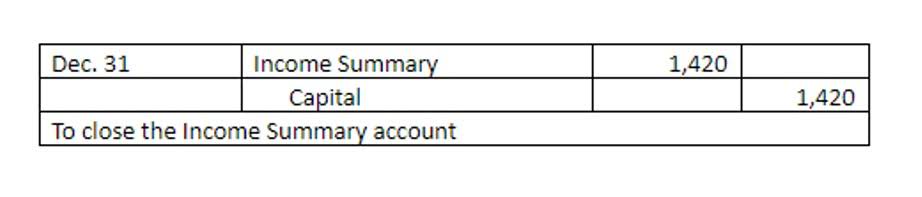
“With leverage below 1x and approximately $1 billion of cash flow expected in FY’26, we have substantial capacity to invest for growth and return capital to shareholders. Our $2 billion authorization and planned $200 million share repurchase in Q1 underscore that confidence,” concluded Talvitie. Create the journal entry following standard debit and credit rules. And if you find significant variances, it means there are missing adjustments that nobody has caught yet. Depreciation ensures asset costs match the revenue you generate over the asset’s life.
How is Unearned Revenue adjusted at the end of an accounting period?
ARR increases by the annualized value of active contracts that commence in a reporting period and decreases by the annualized value of contracts that expire in the reporting period.
This aligns with the matching principle, which mandates that revenues and related expenses must be recorded in the same accounting period.
This method keeps the income statement reflective of the actual earnings and expenses within a period.
As the business delivers goods or services, it gradually recognizes revenue.
Accrued revenues represent the ones you earned but haven’t billed or received yet.
Companies ought to be meticulous in applying these norms, ensuring the systematic recognition of revenue as performance obligations are fulfilled.
ARR should be viewed independently of recognized and unearned revenue and is not intended to be combined with, or to replace, either of those items.
Every number is important when stakeholders base their decisions on what you report. This guide has traversed the concept of unearned revenue and its place in financial accounting. We’ve learned that unearned revenue does not directly feature on the income statement. To guide companies in accurately reporting unearned revenue, regulatory bodies like the Financial Accounting Standards Board (FASB) in the United States provide standards and frameworks. The recognition of unearned revenue is contingent upon the accounting method employed.
Reporting and recording unearned revenue
Unearned revenue is classified as a liability because it reflects an obligation to the customer. The business is holding funds for a service or product that has not yet been provided. Distinguishing between these terms is essential for accurate financial reporting and compliance with standards such as GAAP, particularly in scenarios involving long-term contracts, subscriptions, or https://sabirsabri.com/bookkeeper-job-description-linkedin-talent/ prepaid services. Unearned revenue is presented on the balance sheet exclusively within the Liabilities section. Its placement depends on the timing of the remaining performance obligation, distinguishing between current and non-current liabilities. The first entry occurs when the initial cash is received from the customer.
Investors, creditors, and regulators rely on these documents to make informed decisions. For businesses using the accrual accounting method, revenue is recategorized from unearned to earned progressively as goods or unearned revenue is reported in the financial statements as services are provided, irrespective of the timing of cash flows. At the end of each period, companies review unearned revenue accounts to recognize the portion of revenue earned during that time.
Salesforce Example
The basic premise behind using the liability method for reporting unearned sales is that the amount is yet to be earned. Till that time, the business should report the unearned revenue Balancing off Accounts as a liability. New revenue recognition standards, specifically IFRS 15 and ASC 606, focus on performance obligations and have vast implications for unearned revenue accounting. The recognition of unearned revenue has a profound impact on financial reporting.
Some examples of unearned revenue include advance rent payments, annual subscriptions for a software license, and prepaid insurance. The recognition of deferred revenue is quite common for insurance companies and software as a service (SaaS) companies. And so, unearned revenue should not be included as income yet; rather, it is recorded as a liability. This liability represents an obligation of the company to render services or deliver goods in the future. It will be recognized as income only when the goods or services have been delivered or rendered.
Enquiry Now
Categories
Recent Posts
Archives
Tag Cloud
Sriaas Ayurveda ensures the authentic practice of Ayurveda by providing personalized treatment for each individual at every stage of their journey.
Get in Touch
B-92, near Millennium City Centre Metro Station, Sushant Lok Phase I, Sector 43, Gurugram, Haryana 122009

 +1 (857) 707 3625
 +91 7428 109 528